Chronicle of Convergence · Daily editorial · 2026-10-06
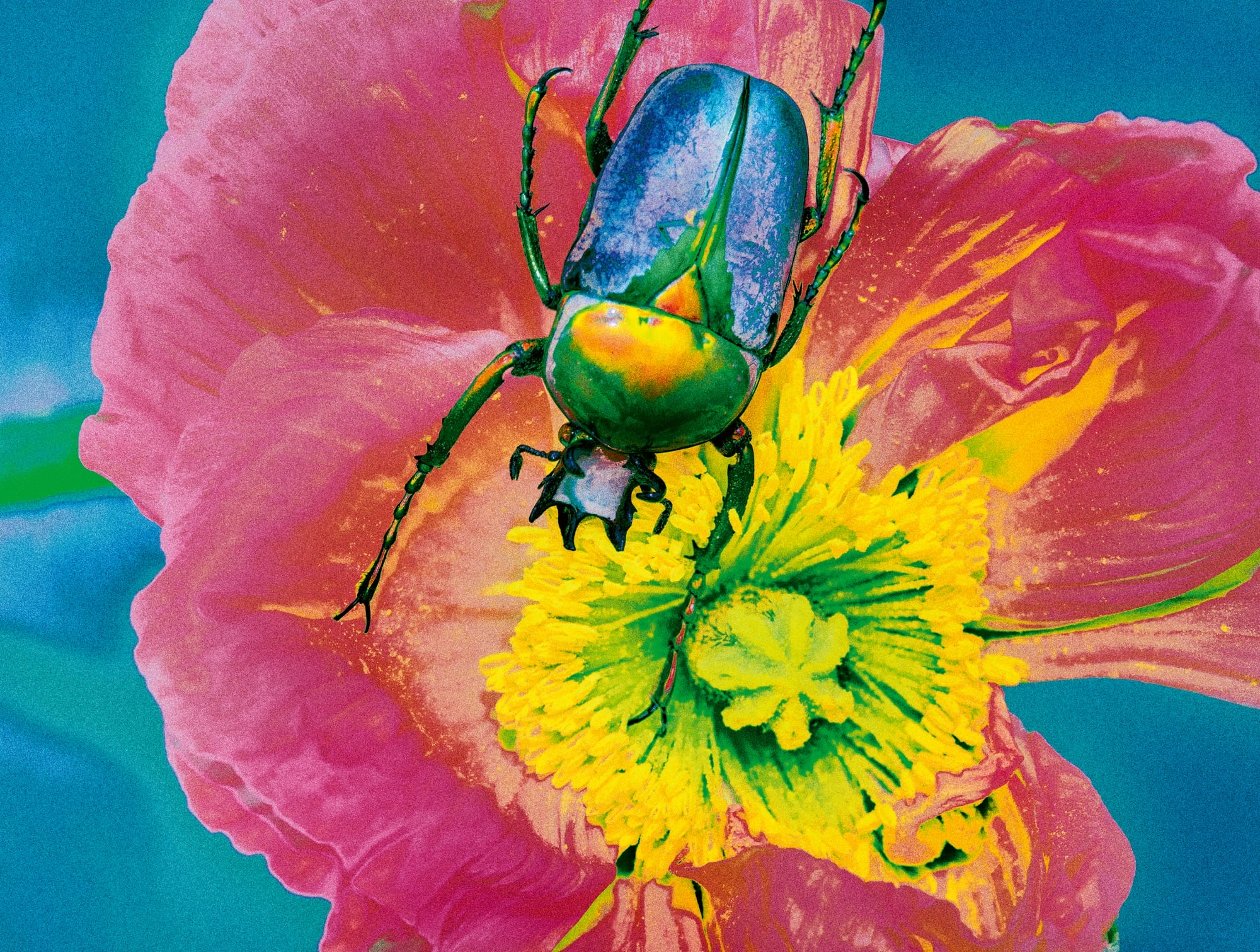
Photo: Photographer Elizaveta Porodina Turns Her Luminous Lens to Insects
The Light We Cast
From the neural circuits illuminated by this year's Nobel Prize to the ecological friction of our digital appetites, we are navigating the paradoxes of progress.
By Dr. Wallace Lynch · Editor in Chief · ~355 words
This week, the scientific community celebrates a literal illumination of the human mind. The 2026 Nobel Prize in Medicine was awarded to Karl Deisseroth, Peter Hegemann, and Georg Nagel for optogenetics—a revolutionary tool that uses light to control precisely targeted neural circuits. It is a triumph of converging disciplines that echoes the profound clinical strides we are seeing elsewhere in neuroscience, such as the revelation that early Deep Brain Stimulation can protect cognitive function in patients with genetic Parkinson's. The biotechnology sector continues its aggressive expansion to capitalize on these leaps, underscored by AstraZeneca’s newly unveiled $1 billion R&D hub in Boston’s Kendall Square. Meanwhile, on a consumer level, tools like the Withings BodyScan 2 are redefining how granularly we can track our individual physical metrics, even as broader healthcare economics remain fiercely politicized—evidenced by the recent push for $90 Medicare premium subsidies ahead of the midterm elections.
Yet, our relentless technological acceleration is fraught with contradictions. The public harbors a profound distaste for artificial intelligence, even as we seemingly cannot get enough of it, driving startups to build LLMs that push beyond mainstream boundaries. We are actively renegotiating where machines belong in our physical spaces as well, balancing the deployment of automated security systems and robotic warehouses with the need for human intuition. In emergency management, for instance, we are learning to automate repeatable coordination tasks while strictly reserving life-saving operational judgment for people.
Crucially, the physical footprint of our digital hunger is colliding with the natural world. Finland’s recent halt of two planned Google data centers over forest clearance concerns serves as a stark reminder of our material limits. It forces us to ask how we might better harmonize with our environment. The art world is already reflecting this tension: a new London exhibition urges us to "listen to the earth" by treating it as both subject and material, while photographer Elizaveta Porodina turns her saturated, ethereal lens to the overlooked beauty of beetles and mantises. As we continue to navigate these new trajectories, our greatest challenge may not be engineering the future, but remaining grounded in the natural world that sustains it.