Chronicle of Convergence · Daily editorial · 2026-10-18
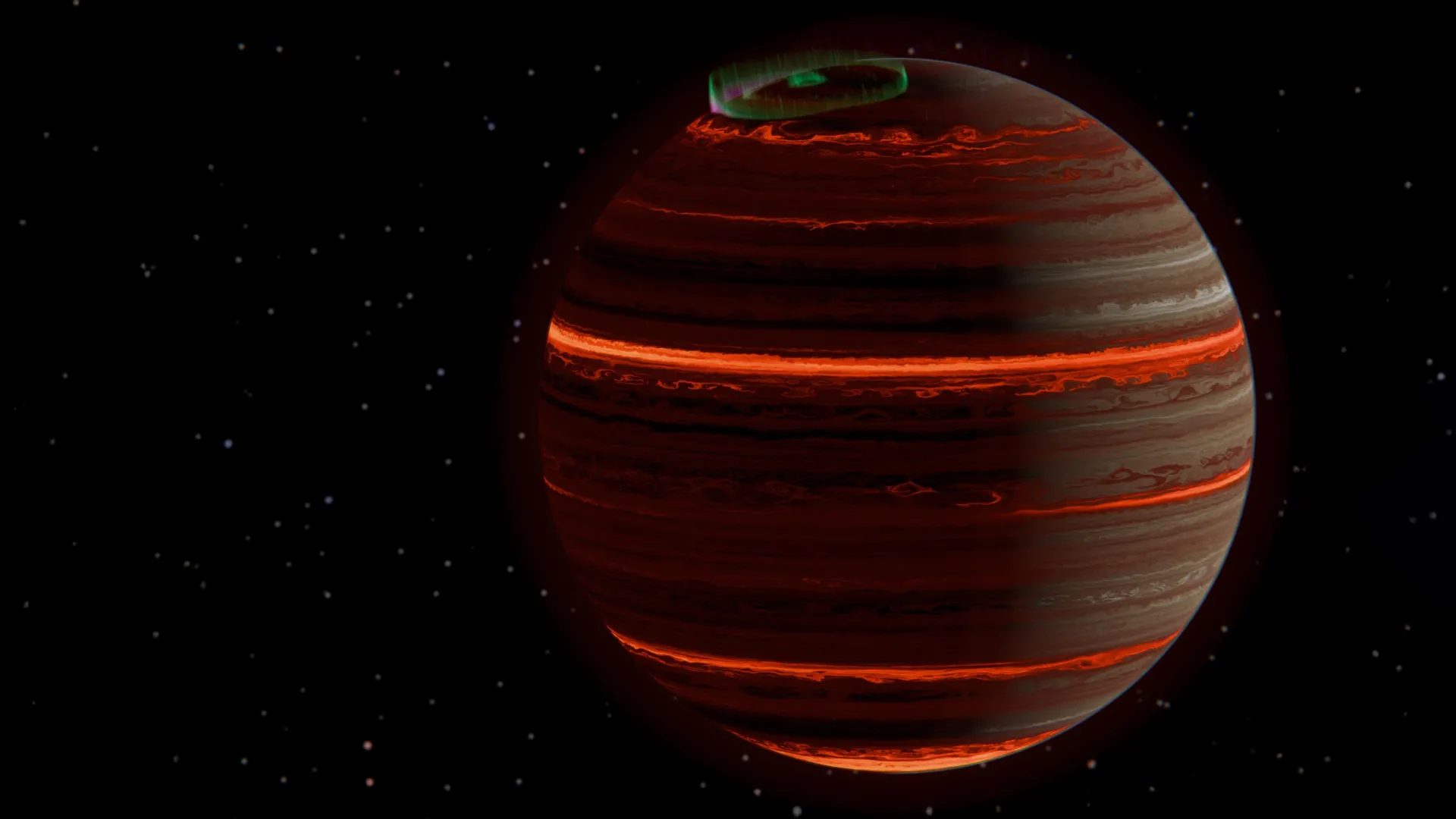
Photo: NASA’s Webb reveals the wild weather of a mysterious world 20 light-years away
The Mechanics of Renewal
Navigating the tension between nostalgia, scientific breakthrough, and modern institutional friction.
By Dr. Wallace Lynch · Editor in Chief · ~269 words
Today’s news underscores a restless search for recalibration across culture, science, and the law. In London, the art world wrestles with whether nostalgic echoes of 1990s "Cool Britannia" can revitalize a shifting market, even as Goldsmiths art school faces the longest staff strike in UK university history. Contrast this domestic institutional friction with Abu Dhabi’s forward-looking expansion, where the new Noma cultural district sets the stage for the emirate’s inaugural Frieze fair. Renewal, it seems, requires more than invoking past glories; it demands structural commitment.
In science and technology, refinement yields remarkable leaps. Engineers fine-tuned NASA’s Nancy Grace Roman Space Telescope by moving a mirror a fraction of a human hair's width, boosting its optical performance by nearly 30 percent. Millions of light-years away, the James Webb Space Telescope has unspooled orderly weather patterns on a turbulent distant world. Back on Earth, neuroscience reveals the hidden mechanics of human restoration—uncovering how deep sleep balances growth hormone to build muscle and repair the brain, while simultaneously cautioning that once-protective neural cells may inadvertently drive cognitive decline as they age.
Yet as technical capabilities advance, human systems remain fraught with ethical and procedural tension. A jury’s $6 million award to ousted scientist David Sabatini highlights the complex legal reckonings still playing out across academic institutions. Meanwhile, platforms like TikTok navigate content moderation controversies, such as the sudden ban of a high-profile Elon Musk documentary account.
Whether fine-tuning space optics, automating legal chronologies, or reforming labor models, progress is rarely linear. True innovation relies not on superficial nostalgia, but on an uncompromising willingness to examine—and repair—the underlying machinery driving our modern world.